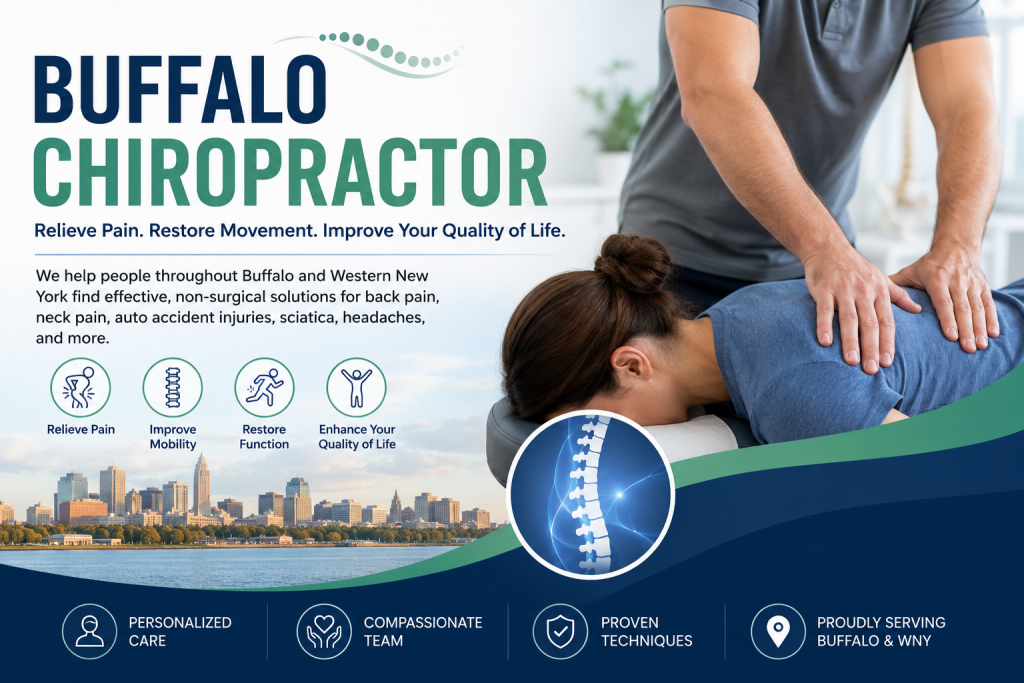
Back Pain Chiropractor Buffalo
Find Trusted Information About Back Pain Treatment in Buffalo, NY
Back pain is one of the most common reasons people seek healthcare, affecting millions of adults each year. Whether your discomfort began after lifting something heavy, spending long hours at a desk, being involved in a car accident, or simply developed over time, persistent back pain can interfere with nearly every aspect of daily life.
If you’re searching for a back pain chiropractor in Buffalo, you’re likely looking for answers as well as relief. Understanding what may be causing your symptoms, what treatment options are available, and when to seek professional evaluation can help you make informed decisions about your health.
This guide explains common causes of back pain, symptoms to watch for, conservative treatment approaches, and how chiropractic care may fit into a broader plan for improving spinal health and mobility.
Understanding Back Pain
Back pain is not a single condition but a symptom that can have many different causes. Some cases involve strained muscles or ligaments that improve with time and conservative care, while others are related to disc injuries, arthritis, spinal degeneration, or nerve irritation.
Pain may develop suddenly after an injury or gradually over weeks, months, or even years. Some people experience occasional stiffness that comes and goes, while others deal with chronic discomfort that affects work, recreation, sleep, and overall quality of life.
Lower back pain is especially common because the lumbar spine supports much of the body’s weight while allowing flexibility for bending, lifting, and twisting.
Although many episodes improve with appropriate care, persistent or severe pain should be evaluated by a qualified healthcare professional to determine the underlying cause and appropriate treatment.
Common Symptoms of Back Pain
Symptoms vary depending on the underlying condition but may include:
- Persistent aching in the lower back
- Sharp pain during movement
- Muscle spasms
- Stiffness after sitting or sleeping
- Difficulty standing fully upright
- Pain that radiates into the hips or legs
- Tingling or numbness
- Reduced flexibility
- Pain after lifting
- Pain that worsens with prolonged sitting
Some symptoms, particularly those involving significant weakness, numbness, loss of bowel or bladder control, or severe trauma, require prompt medical evaluation.
What Causes Back Pain?
Many different conditions can contribute to back pain. Common causes include:
Muscle Strains
One of the most frequent causes of acute back pain involves overstretched or torn muscles resulting from lifting, twisting, sports, or repetitive activities.
Herniated or Bulging Discs
Discs act as cushions between the vertebrae. When damaged, they may irritate nearby nerves and contribute to pain, tingling, or weakness.
Degenerative Changes
As people age, normal wear and tear may affect spinal joints and discs, sometimes contributing to chronic discomfort.
Poor Posture
Long hours at a computer, prolonged sitting, and improper ergonomics often place additional stress on the spine.
Automobile Accidents
Even relatively minor collisions may result in injuries affecting muscles, ligaments, discs, and joints.
Sports Injuries
Athletes frequently experience strains, overuse injuries, and repetitive stress affecting the spine.
Buffalo Winters
Living in Western New York presents unique physical challenges. Snow shoveling, slips on ice, and cold temperatures frequently contribute to seasonal back injuries. Proper lifting techniques, staying active, and warming up before strenuous winter activities may help reduce the risk of injury.
Why an Accurate Diagnosis Matters
Back pain may have similar symptoms even when the underlying causes are very different. For example, muscle strains, herniated discs, arthritis, spinal stenosis, and sciatica can all produce lower back pain.
A comprehensive evaluation helps identify potential contributing factors and determine whether chiropractic care, physical therapy, medical management, imaging, or referral to another healthcare provider may be appropriate.
Treatment should always be individualized rather than based solely on symptoms.
How Chiropractors Evaluate Back Pain
Every episode of back pain is different. Two people may experience discomfort in the same area of the lower back but have completely different underlying causes. One person may have a simple muscle strain that improves within a few weeks, while another could be dealing with a herniated disc, arthritis, sciatica, or another condition that requires a different treatment approach.
Because of this, one of the most important parts of chiropractic care is performing a thorough evaluation before beginning treatment. A chiropractor’s goal is to better understand what may be contributing to your symptoms and determine whether chiropractic care is appropriate or whether another healthcare provider should be involved in your care.
What Happens During a Chiropractic Evaluation?
A comprehensive evaluation typically begins with a discussion about your symptoms and overall health. Understanding when your pain started, what activities make it better or worse, and whether you’ve experienced similar problems before can provide valuable information.
Your chiropractor may ask questions such as:
- Where is your pain located?
- When did your symptoms begin?
- Did your pain start after an injury or accident?
- Does the pain travel into your hips or legs?
- Have you noticed numbness or tingling?
- Are certain movements making the pain worse?
- Have you previously received treatment?
- What type of work do you do?
- Do you participate in sports or regular exercise?
These answers help create a clearer picture of your condition and guide the next steps in the evaluation.
The Physical Examination
Following your medical history, a chiropractor will typically perform a physical examination designed to evaluate how your spine and surrounding muscles are functioning.
The examination may include assessing:
- Posture
- Walking pattern (gait)
- Range of motion
- Muscle strength
- Joint mobility
- Reflexes
- Balance
- Areas of tenderness
- Muscle tightness
- Flexibility
Depending on your symptoms, orthopedic or neurological tests may also be performed to help determine whether nerves, muscles, joints, or spinal discs may be contributing to your pain.
When Imaging May Be Recommended
Many people assume they need an X-ray or MRI before seeing a chiropractor. In reality, imaging is not necessary for every case of back pain.
However, diagnostic imaging may be appropriate in certain situations, including:
- Significant trauma
- Suspected fractures
- Persistent pain that does not improve
- Severe neurological symptoms
- Progressive weakness
- Certain medical conditions
- When additional information is needed before treatment
If imaging is appropriate, your healthcare provider can explain why it is recommended and how the results may influence your treatment plan.
Conservative Treatment Options for Back Pain
Many patients seek chiropractic care because they are interested in conservative treatment options before considering more invasive procedures. Depending on the diagnosis and individual circumstances, treatment may include one or more of the following approaches.
Chiropractic Adjustments
Spinal adjustments are one of the most recognized chiropractic techniques. These manual procedures are intended to improve joint mobility and restore normal movement in areas of the spine that may not be functioning optimally.
The specific techniques used vary depending on the patient’s age, health history, comfort level, and diagnosis.
Not every patient receives the same type of adjustment, and treatment plans are individualized based on the findings of the examination.
Soft Tissue Therapy
Back pain often involves more than the spine itself. Muscles, tendons, ligaments, and connective tissues may also contribute to discomfort and limited movement.
Soft tissue therapies may be used to address:
- Muscle tightness
- Trigger points
- Scar tissue
- Fascial restrictions
- Muscle imbalance
These therapies are frequently combined with other treatment approaches to support overall recovery.
Therapeutic Exercises
Many chiropractors recommend exercises that patients can perform at home between appointments.
Depending on the diagnosis, these exercises may focus on improving:
- Core strength
- Flexibility
- Balance
- Stability
- Range of motion
- Posture
Home exercise programs can play an important role in supporting recovery and helping reduce the likelihood of recurring problems.
Stretching Programs
Tight muscles can place additional stress on the spine and affect normal movement patterns.
A stretching program may target areas such as:
- Hamstrings
- Hip flexors
- Gluteal muscles
- Lower back muscles
- Hip muscles
- Calves
Improving flexibility may help some patients move more comfortably and support long-term spinal health.
Posture and Ergonomic Education
Many episodes of chronic back pain are influenced by everyday habits rather than a single injury.
Small changes to daily routines may reduce stress on the spine over time.
Patients may receive recommendations regarding:
- Sitting posture
- Standing posture
- Computer workstation setup
- Lifting mechanics
- Sleeping positions
- Vehicle ergonomics
- Frequent movement breaks during the workday
These changes are often an important part of an overall treatment plan.
Lifestyle Factors That Affect Back Pain
Successful recovery often involves more than office visits.
Several lifestyle factors can influence spinal health, including:
Physical Activity
Regular movement helps maintain flexibility, muscle strength, and joint mobility. Prolonged inactivity may contribute to stiffness and weakness.
Weight Management
Maintaining a healthy weight may reduce stress on the spine and supporting joints.
Sleep
Poor sleep quality and inadequate mattress support may contribute to back discomfort for some individuals.
Stress
Emotional stress can sometimes increase muscle tension, particularly in the neck, shoulders, and lower back.
Smoking
Research has associated smoking with an increased risk of certain spinal conditions and slower tissue healing.
When Chiropractic Care May Be Appropriate
Many people seek chiropractic care for mechanical causes of back pain, including muscle strains, joint dysfunction, stiffness, and certain types of spine-related discomfort.
However, chiropractic care is not appropriate for every condition.
Depending on your symptoms, you may require evaluation by another healthcare professional, particularly if you experience:
- Severe or worsening weakness
- Loss of bowel or bladder control
- Fever with back pain
- Significant unexplained weight loss
- Suspected infection
- Suspected fracture
- Severe trauma
- Certain underlying medical conditions
A qualified healthcare provider can help determine the most appropriate course of care based on your specific situation.
Taking the Next Step Toward Better Back Health
Back pain can be frustrating, especially when it begins interfering with work, hobbies, family activities, or sleep. The encouraging news is that many people find improvement through conservative treatment approaches that focus on identifying the source of the problem, improving movement, and supporting long-term spinal health.
If you’re searching for a Back Pain Chiropractor in Buffalo, take the time to learn about your condition, ask questions, and choose a healthcare provider who performs a thorough evaluation and develops a treatment plan based on your individual needs—not a one-size-fits-all approach.
As you continue exploring our website, you’ll also find detailed guides covering related conditions such as Sciatica, Herniated Discs, Neck Pain, Auto Accident Injuries, and Spinal Decompression Therapy, helping you better understand your options and make informed decisions about your care.
Back Pain Treatment Options
Understanding Back Pain Treatment Options
Back pain is one of the most common health concerns affecting adults, but there is no single treatment that works for every person. The most effective approach depends on several factors, including the cause of your symptoms, your overall health, how long you’ve been experiencing pain, and how much it affects your daily activities.
For many people, treatment begins with conservative care that focuses on improving movement, reducing discomfort, and helping patients return to their normal routines. In some cases, additional medical evaluation, imaging, or referral to another healthcare provider may also be appropriate.
Understanding the range of treatment options available can help you have informed discussions with your healthcare providers and choose an approach that fits your individual needs.
Chiropractic Care
Chiropractic care focuses on evaluating the spine, joints, muscles, and nervous system to determine whether problems with movement or joint function may be contributing to pain.
After performing a comprehensive examination, a chiropractor may recommend a personalized treatment plan based on your condition, symptoms, medical history, and treatment goals.
Depending on the findings, chiropractic care may include spinal adjustments, soft tissue therapies, stretching, rehabilitation exercises, posture education, ergonomic recommendations, and home care strategies.
Many patients appreciate chiropractic care because it emphasizes conservative, non-surgical management of many musculoskeletal conditions.
Therapeutic Exercise
Exercise is often an important part of recovering from back pain.
When pain develops, many people naturally become less active. While rest may be appropriate for short periods after certain injuries, prolonged inactivity can sometimes contribute to stiffness, muscle weakness, and reduced flexibility.
Depending on your condition, healthcare providers may recommend exercises designed to improve:
- Core strength
- Flexibility
- Balance
- Stability
- Coordination
- Endurance
Building stronger muscles that support the spine may help improve function and reduce the likelihood of recurring episodes of back pain.
Stretching and Mobility
Limited flexibility is another common contributor to back discomfort.
Tight hamstrings, hip flexors, gluteal muscles, and lower back muscles can all affect how the spine moves during everyday activities.
A regular stretching routine may help improve mobility, reduce muscle tension, and support healthy movement patterns. Because every person is different, stretching programs should be appropriate for the individual’s condition and physical abilities.
Improving Posture
Many people spend hours each day sitting at a computer, driving, or looking down at mobile devices.
Over time, poor posture may place additional stress on the muscles and joints of the neck and back.
Small improvements in posture can often make a meaningful difference.
Examples include:
- Keeping computer monitors at eye level
- Supporting the lower back while sitting
- Standing and walking periodically throughout the day
- Avoiding prolonged positions whenever possible
- Using proper lifting techniques
- Sleeping in positions that maintain a neutral spine
These simple habits may help reduce unnecessary strain on the back.
Healthy Lifestyle Habits
Spinal health is influenced by many aspects of everyday life.
Maintaining a healthy lifestyle may help support recovery and reduce the risk of future episodes of back pain.
Important factors include:
- Staying physically active
- Maintaining a healthy weight
- Getting adequate sleep
- Managing stress
- Eating a balanced diet
- Avoiding tobacco use
- Remaining consistent with prescribed home exercises
Even small improvements made over time can contribute to better overall musculoskeletal health.
Physical Therapy
Some patients may benefit from physical therapy as part of their treatment plan.
Physical therapists focus on restoring movement, improving strength, increasing flexibility, and helping patients safely return to daily activities.
Treatment may include:
- Manual therapy
- Stretching
- Strengthening exercises
- Balance training
- Functional movement training
- Home exercise programs
In some situations, chiropractic care and physical therapy may complement one another as part of a coordinated treatment plan.
Medical Management
Not every case of back pain can be managed with conservative care alone.
Depending on the diagnosis, a physician may recommend:
- Diagnostic testing
- Prescription medications
- Injections
- Referral to specialists
- Additional medical evaluation
Some conditions require prompt medical attention, particularly if significant neurological symptoms or other serious warning signs are present.
Surgery
Although many people worry that back pain automatically means surgery, this is often not the case.
Many common causes of back pain improve with conservative treatment.
When surgery is recommended, it is typically based on factors such as:
- The underlying diagnosis
- Severity of symptoms
- Neurological findings
- Failure of conservative treatment
- Overall health
If surgery becomes a consideration, discussing the risks, benefits, expected recovery, and available alternatives with your surgeon is an important part of the decision-making process.
Choosing the Right Treatment Plan
There is no universal solution for back pain because every patient has unique needs and goals.
An appropriate treatment plan should consider:
- Your diagnosis
- Medical history
- Activity level
- Occupation
- Age
- Lifestyle
- Personal preferences
- Overall health
Working with qualified healthcare professionals can help you understand your options and develop a plan designed specifically for your situation rather than relying on a one-size-fits-all approach.
Taking the First Step
Living with back pain can be frustrating, but understanding your condition is often the first step toward improvement. Whether your symptoms are the result of a recent injury, repetitive strain, poor posture, or a chronic spinal condition, learning about available treatment options can help you make informed healthcare decisions.
The remainder of this guide explores factors unique to Buffalo NY residents, answers frequently asked questions, and provides additional resources to help you better understand back pain and the many approaches available for managing it.
Back Pain in Buffalo: Local Factors That May Affect Your Spine
Why Back Pain Is a Common Concern for Buffalo Residents
Although back pain affects people across the country, residents of Buffalo and Western New York face several unique challenges that can place additional stress on the spine throughout the year. From harsh winter weather to physically demanding occupations, everyday life in this region often involves activities that increase the risk of back strains, muscle injuries, and joint discomfort.
Understanding these factors can help you recognize potential causes of back pain and take steps to reduce your risk of future injuries.
Buffalo Winters Can Be Tough on Your Back
Anyone who has lived through a Buffalo winter knows that snow and ice are simply part of life. While winter can be beautiful, it also brings activities that commonly lead to back injuries.
One of the biggest culprits is snow shoveling.
Shoveling combines several movements that can place significant stress on the lower back:
- Repeated bending
- Twisting while lifting
- Heavy loads of wet snow
- Working in cold temperatures
- Sudden bursts of physical activity
Cold weather can also cause muscles to become tighter and less flexible, making strains more likely if you begin strenuous activity without warming up first.
Whenever possible, pace yourself, lift with your legs instead of your back, avoid twisting while carrying snow, and take frequent breaks during larger snow removal projects.
Slips and Falls Increase During Winter
Icy sidewalks, parking lots, and driveways create another seasonal challenge.
Even a seemingly minor slip can place tremendous force on the muscles, ligaments, and joints of the back. Sometimes pain develops immediately, while in other cases soreness and stiffness may not appear until the following day.
If you’ve experienced a fall and continue to have persistent pain, limited mobility, numbness, or weakness, it’s important to seek an appropriate medical evaluation.
Desk Jobs and Remote Work
Not every case of back pain is caused by heavy lifting.
Many Buffalo residents spend eight or more hours each day sitting at a desk, working on a computer, or driving between appointments.
Extended sitting may contribute to:
- Muscle tightness
- Reduced flexibility
- Poor posture
- Weak core muscles
- Increased stress on the lower back
Simple habits such as standing periodically, adjusting monitor height, improving chair support, and taking short walking breaks throughout the day may help reduce strain on the spine.
Physically Demanding Occupations
Western New York has a diverse workforce that includes healthcare professionals, skilled trades, manufacturing employees, warehouse workers, first responders, transportation workers, and construction crews.
Many of these occupations involve:
- Repetitive lifting
- Carrying heavy equipment
- Frequent bending
- Twisting movements
- Long hours on your feet
- Climbing ladders
- Working in awkward positions
These physical demands can increase the likelihood of both acute injuries and long-term wear and tear on the spine.
Learning proper body mechanics, maintaining flexibility, and strengthening the muscles that support the spine may help reduce injury risk.
Active Lifestyles Can Also Lead to Injury
Buffalo residents enjoy staying active throughout the year. Whether it’s running, cycling, golfing, skiing, weight training, pickleball, recreational sports, or simply working around the house, physical activity provides many health benefits.
However, overuse, improper lifting techniques, poor conditioning, or returning to exercise too quickly after time off can contribute to back pain.
Athletes and recreational exercisers should pay attention to:
- Proper warm-ups
- Flexibility training
- Core strengthening
- Gradual increases in activity
- Adequate recovery time
These habits may help reduce the likelihood of common overuse injuries.
Automobile Accidents Can Cause Lasting Back Pain
Back pain following a motor vehicle collision is common, even when vehicle damage appears minor.
The force generated during an accident may affect muscles, ligaments, spinal joints, and intervertebral discs. Some people notice pain immediately, while others develop symptoms over the next several days.
If your back pain began after an automobile accident, documenting your symptoms and obtaining an appropriate medical evaluation can be an important part of understanding your condition and developing a treatment plan.
Be sure to visit our guide on Auto Accident Chiropractor Buffalo to learn more about injuries commonly associated with motor vehicle collisions.
Small Daily Habits Matter More Than Many People Realize
While accidents certainly cause back injuries, many cases develop gradually because of repeated stress placed on the spine over months or years.
Some examples include:
- Looking down at a phone for extended periods
- Poor lifting mechanics
- Carrying heavy bags on one shoulder
- Sitting with poor posture
- Sleeping on an unsupportive mattress
- Lack of regular exercise
- Weak core muscles
- Inadequate stretching
Making small improvements to these daily habits may help support long-term spinal health and reduce recurring episodes of discomfort.
Supporting a Healthier Back Every Day
No matter what caused your back pain, understanding the contributing factors is an important step toward recovery and prevention. While some injuries occur unexpectedly, many cases are influenced by everyday activities, workplace habits, seasonal challenges, and lifestyle choices.
By combining education, appropriate medical evaluation, healthy movement, good posture, regular exercise, and preventive habits, many people are able to reduce their risk of future back problems and maintain an active lifestyle.
Throughout this website, you’ll find additional resources covering common spinal conditions, treatment options, injury prevention strategies, and answers to frequently asked questions. Whether you’re researching lower back pain, recovering from an accident, or simply looking for ways to protect your spine, our goal is to provide clear, reliable information that helps you make informed decisions about your health.
Frequently Asked Questions About Back Pain
Back pain affects millions of people every year, and it’s one of the most common reasons patients seek chiropractic and medical care. Below are answers to some of the questions people frequently ask when searching for information about back pain, treatment options, and chiropractic care in Buffalo.
When Should I See a Chiropractor for Back Pain?
Many people wait weeks or even months before seeking an evaluation, hoping their symptoms will resolve on their own. While minor muscle soreness often improves with time, persistent or recurring back pain shouldn’t simply be ignored.
If your pain is interfering with work, sleep, exercise, or everyday activities, it may be time to seek professional evaluation. A chiropractor can perform an examination to better understand your symptoms and determine whether chiropractic care may be appropriate or whether referral to another healthcare provider is recommended.
However, certain symptoms—including severe weakness, loss of bowel or bladder control, fever accompanied by back pain, or pain following significant trauma—require prompt medical attention rather than routine chiropractic evaluation.
Can a Chiropractor Help Lower Back Pain?
Many people seek chiropractic care for lower back pain because it is a conservative, non-surgical approach to managing many musculoskeletal conditions. After completing an evaluation, a chiropractor may recommend a treatment plan based on your diagnosis, symptoms, and overall health.
Depending on the cause of your pain, treatment may include spinal adjustments, soft tissue therapies, therapeutic exercises, stretching, posture education, ergonomic recommendations, and home care strategies.
Because every patient is different, there is no single treatment approach that is appropriate for everyone. The goal is to improve movement, reduce pain, and help patients return to their normal daily activities whenever possible.
What Causes Lower Back Pain Without an Injury?
Not every episode of back pain begins with a dramatic injury.
Many cases develop gradually because of everyday habits and repeated stress placed on the spine over time.
Common contributing factors include:
- Poor posture
- Long hours sitting
- Weak core muscles
- Limited flexibility
- Repetitive lifting
- Aging and degenerative changes
- Muscle imbalances
- Physically demanding work
- Lack of regular exercise
Because multiple conditions can produce similar symptoms, a thorough evaluation is often the best way to identify the underlying cause and determine appropriate treatment options.
Is Ice or Heat Better for Back Pain?
The answer often depends on the type of injury and when it occurred.
Ice is commonly used during the first 24 to 48 hours following an acute injury to help reduce swelling and discomfort. Heat is frequently used later to relax tight muscles, improve circulation, and reduce stiffness.
Some people find alternating between ice and heat provides relief, while others respond better to one method than the other.
If pain persists, worsens, or is accompanied by neurological symptoms such as numbness or weakness, it is important to seek professional medical evaluation rather than relying solely on home remedies.
Can Sitting All Day Cause Back Pain?
Yes. Extended periods of sitting can contribute to muscle tightness, reduced flexibility, poor posture, and increased pressure on the lower back.
Many office workers, truck drivers, students, and remote employees experience back discomfort related to prolonged sitting.
Simple habits that may help include:
- Standing every 30 to 60 minutes
- Walking periodically throughout the day
- Adjusting your workstation ergonomics
- Supporting your lower back while sitting
- Stretching regularly
- Strengthening your core muscles
Small improvements in daily habits can make a significant difference over time.
Is Walking Good for Back Pain?
For many people, gentle walking can be beneficial because it promotes circulation, helps maintain mobility, and encourages normal movement patterns.
However, the appropriate level of activity depends on the cause of your pain. Some spinal conditions may require activity modification during recovery.
If walking significantly increases your pain or causes symptoms to travel into your legs, it’s important to consult a healthcare provider before continuing strenuous activity.
Can Poor Posture Really Cause Back Pain?
Poor posture is not always the sole cause of back pain, but it can certainly contribute to muscle fatigue and increased stress on the spine.
Common postural habits include:
- Slouching while sitting
- Leaning forward at a computer
- Looking down at a phone for extended periods
- Standing with uneven weight distribution
Improving posture, strengthening supporting muscles, and creating a more ergonomic work environment may help reduce unnecessary strain.
Can Stress Affect My Back?
Stress doesn’t directly injure the spine, but it can contribute to increased muscle tension, particularly in the neck, shoulders, and lower back.
Many people notice their muscles become tighter during periods of emotional stress, poor sleep, or anxiety.
Managing stress through regular exercise, adequate sleep, stretching, relaxation techniques, and healthy lifestyle habits may complement other treatment approaches.
How Can I Help Prevent Back Pain?
Although not every injury can be prevented, healthy habits may reduce your overall risk.
Helpful strategies include:
- Staying physically active
- Maintaining a healthy weight
- Strengthening your core muscles
- Practicing proper lifting techniques
- Stretching regularly
- Improving posture
- Avoiding prolonged sitting
- Using ergonomic workstations
- Wearing appropriate footwear
- Warming up before strenuous activities
Consistency is often more important than making dramatic changes all at once.
Does Insurance Cover Chiropractic Care?
Insurance coverage varies depending on your health insurance plan, your diagnosis, and the services being provided.
Some insurance plans include chiropractic benefits, while others have limitations regarding the number of visits or types of treatment covered.
If you’re considering chiropractic care, it’s a good idea to contact your insurance company or the provider’s office to verify your specific coverage, copayments, deductibles, and any referral requirements before beginning treatment.
Learn More About Back Pain and Chiropractic Care
Back pain can have many different causes, and no two patients experience it in exactly the same way. Understanding your symptoms, learning about available treatment options, and seeking appropriate professional evaluation when necessary are important steps toward improving your spinal health.
As you continue exploring our website, you’ll find in-depth guides covering related topics including Sciatica, Neck Pain, Herniated Discs, Auto Accident Injuries, Sports Injuries, Massage Therapy, and Spinal Decompression. Each resource is designed to help Buffalo-area residents better understand common musculoskeletal conditions and the conservative treatment options that may be available.
Take the Next Step Toward Better Back Health
Find a Back Pain Chiropractor in Buffalo
Living with back pain can make even simple daily activities feel challenging. Whether your symptoms developed gradually over time, began after lifting something heavy, followed a sports injury, or resulted from a motor vehicle accident, understanding the cause of your discomfort is the first step toward finding the right treatment.
While many episodes of back pain improve with conservative care, persistent pain should not be ignored. A thorough evaluation by a qualified healthcare provider can help determine what may be contributing to your symptoms and whether chiropractic care or another treatment approach may be appropriate.
Our goal is to provide Buffalo residents with reliable, easy-to-understand information about back pain, chiropractic care, and other conservative treatment options. By learning more about your condition, you’ll be better prepared to discuss your symptoms, ask informed questions, and make confident healthcare decisions.
If you’re ready to take the next step, we can help connect you with an experienced chiropractor serving Buffalo and the surrounding Western New York communities.
Speak With a Buffalo Chiropractor
✔ Discuss your back pain concerns
✔ Learn about available treatment options
✔ Find care close to your home or workplace
✔ Schedule an appointment with a local chiropractic provider
Call today or complete our online contact form to get started.
Continue Exploring Our Chiropractic Resource Center
Every person’s back pain is different, which is why we’ve created a growing library of educational resources covering the conditions and treatments people search for most often.
You may also find these guides helpful:
- Neck Pain Chiropractor Buffalo
- Sciatica Chiropractor Buffalo
- Auto Accident Chiropractor Buffalo
- Whiplash Chiropractor Buffalo
- Herniated Disc Treatment Buffalo
- Spinal Decompression Buffalo
- Sports Chiropractor Buffalo
- Massage Therapy Buffalo
- Headache & Migraine Chiropractor Buffalo
As our resource center continues to grow, you’ll find additional articles covering injury prevention, exercise recommendations, wellness tips, treatment options, and answers to common questions about chiropractic care throughout Buffalo and Western New York.
Helping Buffalo Residents Make Informed Decisions
Choosing a chiropractor is an important healthcare decision. Whether you’re seeking care for the first time or looking for a provider better suited to your needs, having accurate information can make the process easier.
Thank you for visiting ChiropractorBuffaloNY.com. We hope this guide has helped you better understand back pain, the factors that contribute to it, and the conservative treatment options that may be available. We invite you to continue exploring our website and use these resources to help you make informed decisions about your health and well-being.