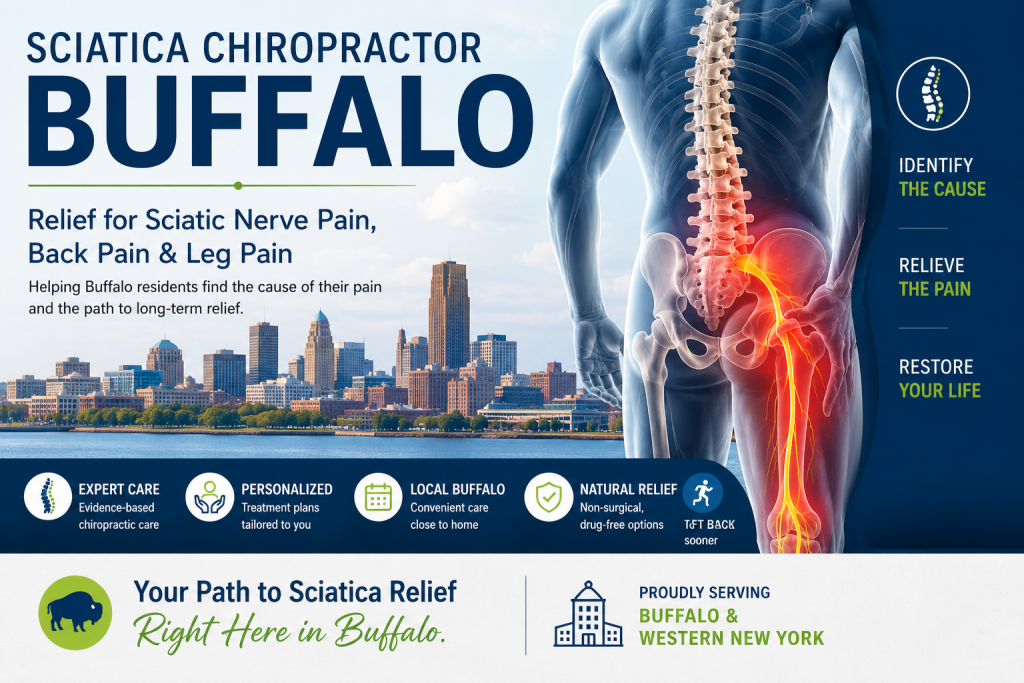
Sciatica Chiropractor Buffalo

Sciatica Chiropractor Buffalo

On This Page

  • What Is Sciatica?
  • Common Symptoms of Sciatica
  • What Causes Sciatica?
  • How Chiropractic Care Can Help Sciatica
  • Sciatica Treatment Options
  • Why Choose a Buffalo Chiropractor for Sciatica?
  • Sciatica Prevention Tips
  • When Should You See a Chiropractor?
  • Frequently Asked Questions
  • Contact a Buffalo Chiropractor for Sciatica Relief

Understanding Sciatica

Learn About Sciatica, Common Symptoms, Treatment Options, and Conservative Care

Pain that starts in your lower back and travels through your hip, buttock, or down your leg can be both frustrating and frightening. For many people, these symptoms are associated with sciatica, a condition that affects the sciatic nerve—the largest nerve in the human body.

If you’re searching for a Sciatica Chiropractor in Buffalo, you’re probably looking for more than temporary relief. You want to understand what’s causing your symptoms, what treatment options may be available, and whether conservative care may help you return to your normal activities.

This guide is designed to answer those questions. We’ll explain what sciatica is, discuss common causes and symptoms, review treatment options, and provide educational resources to help you make informed healthcare decisions. Whether your symptoms began after lifting something heavy, following an automobile accident, or gradually developed over time, understanding the condition is an important first step.


What Is Sciatica?

Despite what many people believe, sciatica is not actually a diagnosis. Instead, it describes a collection of symptoms caused by irritation, inflammation, or compression affecting the sciatic nerve.

The sciatic nerve begins in the lower portion of the spine, travels through the pelvis and buttocks, and continues down each leg before branching into smaller nerves that extend into the feet.

When something places pressure on or irritates this nerve, pain and other symptoms may develop anywhere along its path.

Some people experience mild discomfort that comes and goes, while others describe severe pain that interferes with walking, sitting, sleeping, or performing everyday activities.

Understanding what is causing irritation of the sciatic nerve is one of the most important parts of developing an appropriate treatment plan.


Understanding the Sciatic Nerve

The sciatic nerve is the largest and longest nerve in the body. It is formed by several nerve roots that exit the lower spine before joining together and traveling through the buttocks into each leg.

Because this nerve controls sensation and muscle function throughout much of the lower extremity, irritation can produce symptoms in areas far away from the lower back itself.

For example, a problem occurring within the lumbar spine may result in:

  • Pain in the buttock
  • Burning sensations down the leg
  • Tingling in the calf
  • Numbness in the foot
  • Muscle weakness
  • Difficulty walking comfortably

This is one reason why accurately identifying the source of symptoms is so important. Pain felt in the leg doesn’t always originate in the leg.


Common Symptoms of Sciatica

Sciatica symptoms vary considerably from one person to another.

Some individuals experience only occasional discomfort, while others have persistent symptoms that significantly affect daily life.

Common symptoms include:

  • Pain that begins in the lower back
  • Pain radiating into the buttock
  • Pain traveling down one leg
  • Burning sensations
  • Tingling
  • Numbness
  • Muscle weakness
  • Pain that becomes worse while sitting
  • Discomfort when standing after prolonged sitting
  • Sharp or shooting pain
  • Difficulty walking long distances

Most cases affect only one side of the body, although symptoms can occasionally occur on both sides depending on the underlying condition.


Who Is Most Likely to Develop Sciatica?

Sciatica can affect adults of many different ages and activity levels.

Certain factors may increase the likelihood of developing sciatic nerve irritation, including:

Physically Demanding Jobs

Construction workers, warehouse employees, nurses, mechanics, delivery drivers, and others whose jobs involve frequent lifting, bending, twisting, or prolonged standing may place increased stress on the lower back.

Office Workers

Sitting for long periods may contribute to poor posture, muscle tightness, reduced flexibility, and increased pressure on the lower spine.

Athletes

Running, weightlifting, golf, tennis, football, and other sports sometimes involve repetitive movements that may contribute to lower back injuries.

Individuals Recovering from Automobile Accidents

Motor vehicle collisions may injure muscles, ligaments, spinal joints, or discs, potentially contributing to sciatic nerve irritation.

Adults with Age-Related Spinal Changes

As people age, normal wear and tear affecting discs and joints may increase the likelihood of conditions associated with sciatica.


How Sciatica Can Affect Everyday Life

Many people think of sciatica as simply “leg pain,” but the condition can affect much more than that.

Depending on the severity of symptoms, people may have difficulty:

  • Driving
  • Sitting through meetings
  • Working at a computer
  • Walking long distances
  • Climbing stairs
  • Sleeping comfortably
  • Exercising
  • Playing with children or grandchildren
  • Participating in recreational activities
  • Performing physically demanding work

Persistent pain can also contribute to frustration, fatigue, reduced activity levels, and a decreased quality of life.

Because symptoms often fluctuate, some people delay seeking evaluation until pain becomes much more severe.


Sciatica Is Often Mistaken for Other Conditions

One reason professional evaluation is important is that several different medical conditions can produce symptoms similar to sciatica.

Pain traveling into the leg may also be associated with:

  • Herniated discs
  • Lumbar spinal stenosis
  • Piriformis syndrome
  • Sacroiliac joint dysfunction
  • Peripheral nerve disorders
  • Hip conditions
  • Certain vascular conditions

Although symptoms may appear similar, the appropriate treatment can differ significantly depending on the underlying cause.

For that reason, obtaining an accurate diagnosis is an important first step before beginning any treatment program.


Finding the Cause Is the Key to Treatment

Many people search online hoping to find a quick solution for sciatic nerve pain. While stretches, exercises, and home remedies may provide temporary relief for some individuals, lasting improvement often begins with understanding why the sciatic nerve has become irritated in the first place.

Whether symptoms are related to a herniated disc, muscle tightness, degenerative spinal changes, an automobile accident, or another condition, identifying the underlying cause allows healthcare providers to recommend the most appropriate treatment options.

In the next section, we’ll explore the most common causes of sciatica, explain how different conditions affect the sciatic nerve, and discuss why two people with similar symptoms may require very different treatment plans.

Common Causes of Sciatica

What Causes Sciatica?

Sciatica develops when the sciatic nerve becomes irritated, inflamed, or compressed somewhere along its path. While many people think sciatica is a condition by itself, it is actually a symptom of an underlying problem affecting the lower spine, pelvis, or surrounding tissues.

Because several different conditions can produce similar symptoms, identifying the source of nerve irritation is one of the most important steps in developing an appropriate treatment plan.

Below are some of the most common causes of sciatica.


Herniated Discs

One of the leading causes of sciatica is a herniated lumbar disc.

The discs located between the vertebrae act as cushions that absorb shock and allow the spine to move comfortably. Each disc has a tough outer layer and a softer gel-like center.

If the outer portion weakens or tears, part of the inner material may push outward. When this occurs, the disc can place pressure on nearby spinal nerves, including those that eventually form the sciatic nerve.

Depending on the severity of the compression, symptoms may include:

  • Lower back pain
  • Sharp pain radiating into the leg
  • Tingling sensations
  • Numbness
  • Muscle weakness
  • Difficulty standing or walking

Not every herniated disc causes symptoms, and not every case requires surgery. Many people improve with conservative treatment, but a thorough evaluation is important to determine the most appropriate course of care.


Degenerative Disc Disease

As we age, the discs of the spine naturally lose some of their water content and flexibility.

These normal age-related changes may reduce the amount of cushioning between the vertebrae and, in some individuals, contribute to irritation of nearby nerves.

Although the term “degenerative” may sound alarming, it often describes gradual wear and tear that occurs over many years rather than a rapidly worsening disease.

Some people experience no symptoms, while others develop chronic lower back pain, stiffness, or sciatica.


Lumbar Spinal Stenosis

Lumbar spinal stenosis occurs when the spaces within the lower spine become narrower.

As these spaces decrease, the nerves traveling through the spinal canal may become compressed.

This condition is more common in older adults and may produce symptoms such as:

  • Pain while walking
  • Leg weakness
  • Numbness
  • Tingling
  • Cramping
  • Symptoms that improve while sitting or leaning forward

Because spinal stenosis shares symptoms with several other conditions, professional evaluation is essential for an accurate diagnosis.


Piriformis Syndrome

The piriformis is a small muscle located deep within the buttock.

In some individuals, the sciatic nerve passes beneath or even through this muscle. If the piriformis becomes tight, inflamed, or irritated, it may place pressure on the sciatic nerve and create symptoms that closely resemble traditional sciatica.

People with piriformis syndrome often notice:

  • Pain deep within the buttock
  • Discomfort while sitting
  • Pain that travels down the back of the leg
  • Increased pain after prolonged driving
  • Tenderness over the buttock muscles

Although the symptoms may appear similar to those caused by a herniated disc, the underlying problem is different, making an accurate diagnosis especially important.


Bone Spurs

Bone spurs are small bony growths that sometimes develop as part of the body’s natural response to aging and joint changes.

When these growths develop near spinal nerves, they may contribute to irritation or compression of the nerves that form the sciatic nerve.

Bone spurs often develop gradually and may or may not produce noticeable symptoms.


Spondylolisthesis

Spondylolisthesis occurs when one vertebra slips forward relative to the vertebra below it.

This change in spinal alignment may narrow the spaces where nerves travel, increasing the possibility of nerve irritation.

Symptoms vary depending on the degree of slippage and whether nearby nerves are affected.


Traumatic Injuries

A sudden injury can sometimes trigger sciatica.

Common examples include:

  • Automobile accidents
  • Falls
  • Sports injuries
  • Heavy lifting accidents
  • Workplace injuries

Trauma may affect muscles, ligaments, spinal joints, discs, or nerves.

In some cases, symptoms appear immediately, while in others they develop gradually over several days.

If your symptoms began after an accident, obtaining a prompt medical evaluation is important.


Pregnancy

Pregnancy places additional demands on the lower back and pelvis.

As the baby grows, changes in posture, weight distribution, and hormone levels may increase stress on the spine and surrounding muscles.

Some pregnant women experience sciatica due to increased pressure on nearby nerves or muscle tightness within the pelvis.

Because treatment recommendations during pregnancy differ from those for the general population, pregnant patients should always consult with qualified healthcare providers regarding appropriate care.


Repetitive Movements

Not every case of sciatica results from one dramatic injury.

Repeated bending, twisting, lifting, or prolonged sitting may gradually contribute to irritation affecting the lower back and sciatic nerve.

Occupations commonly associated with repetitive spinal stress include:

  • Construction
  • Manufacturing
  • Healthcare
  • Warehouse work
  • Truck driving
  • Delivery services
  • Landscaping
  • Office work

Improving body mechanics, maintaining flexibility, and taking regular movement breaks may help reduce the risk of developing chronic spinal problems.


Obesity and Physical Inactivity

Maintaining a healthy weight and staying physically active can play an important role in overall spinal health.

Excess body weight may increase stress on the lower back, while prolonged inactivity can contribute to muscle weakness, poor flexibility, and decreased spinal support.

Regular physical activity, when appropriate for your condition, helps maintain the strength and endurance of the muscles that support the spine.


Why Determining the Cause Matters

Although sciatica symptoms often feel similar from one person to another, the underlying causes can be very different.

Someone experiencing symptoms because of a herniated disc may require a different treatment approach than someone whose pain is caused by piriformis syndrome, spinal stenosis, or degenerative changes.

For that reason, healthcare providers focus not only on relieving symptoms but also on identifying the condition responsible for irritating the sciatic nerve.

An accurate diagnosis is the foundation of an effective treatment plan.


The Next Step Is a Proper Evaluation

If you’ve been experiencing pain that travels from your lower back into your buttock or leg, it’s important to remember that sciatica is a symptom—not a diagnosis. Understanding why your sciatic nerve is irritated is essential before deciding on the most appropriate treatment.

In the next section, we’ll explain how healthcare providers evaluate sciatica, discuss the diagnostic tests that may be used, and review the warning signs that require immediate medical attention.

How a Chiropractor Can Help With Sciatica Pain in Buffalo

Sciatica pain is often caused by irritation, inflammation, or pressure affecting the sciatic nerve — the largest nerve in the human body. When this nerve becomes aggravated, pain can travel from the lower back through the buttocks and down the back of the leg. For many people in Buffalo, NY, sciatica can interfere with work, exercise, sleep, and everyday activities.

A sciatica chiropractor in Buffalo takes a different approach than simply masking symptoms with medication. Chiropractic care focuses on identifying the underlying factors contributing to nerve irritation and helping restore proper movement and function throughout the spine and surrounding tissues.

Identifying the Source of Your Sciatic Nerve Pain

Not all sciatica is caused by the same problem. During an evaluation, a chiropractor will look at several factors that may contribute to your symptoms, including:

  • Spinal alignment and movement restrictions
  • Muscle tension and imbalances
  • Disc-related problems
  • Hip and pelvic movement issues
  • Posture and body mechanics
  • Previous injuries or repetitive stress

Understanding the cause of your sciatica is an important first step because effective treatment should address the reason the nerve is being irritated rather than only temporarily reducing discomfort.

Chiropractic Adjustments for Sciatica Relief

One of the most common treatments used by chiropractors for sciatica is spinal adjustment. Chiropractic adjustments are designed to improve joint motion, reduce restrictions, and help the spine function more efficiently.

When certain areas of the lower spine are not moving properly, surrounding muscles may tighten and additional stress can be placed on nearby nerves. By improving spinal mobility, chiropractic care may help reduce pressure and irritation associated with sciatic nerve symptoms.

Many patients seek chiropractic treatment because it provides a non-surgical approach focused on improving function and mobility.

Soft Tissue Therapy and Muscle Relief

The muscles surrounding the lower back, hips, and pelvis can play a significant role in sciatica symptoms. Tight or overworked muscles may increase discomfort and limit normal movement.

A Buffalo chiropractor may incorporate soft tissue techniques to help address:

  • Tight glute muscles
  • Piriformis muscle tension
  • Lower back muscle restrictions
  • Hip mobility limitations
  • Muscle adhesions caused by injury or overuse

Improving soft tissue function can complement chiropractic adjustments and help patients move more comfortably.

Corrective Exercises and Long-Term Improvement

A major goal of chiropractic care is not just helping patients feel better temporarily but helping them improve their overall spinal health.

Depending on your condition, a chiropractor may recommend exercises designed to:

  • Strengthen the core muscles supporting the spine
  • Improve flexibility
  • Restore normal movement patterns
  • Reduce the chance of recurring sciatic pain
  • Improve posture and body mechanics

These exercises can be especially helpful for people who spend long hours sitting at a desk, driving, or performing physically demanding work throughout the Buffalo area.

A Personalized Approach to Sciatica Treatment

Every person’s experience with sciatica is different. Some people experience mild discomfort that comes and goes, while others deal with severe pain, numbness, or weakness that affects daily life.

A personalized chiropractic evaluation helps determine what treatment options may be appropriate based on your symptoms, lifestyle, and goals.

If you are searching for a Buffalo chiropractor for sciatica pain, a thorough evaluation can help you better understand what may be contributing to your discomfort and what steps may help you return to normal activities.


Common Symptoms of Sciatica and When to See a Buffalo Chiropractor

Sciatica symptoms can vary widely from person to person. Some people experience occasional discomfort in their lower back, while others may have sharp, shooting pain that travels down the leg and makes normal activities difficult.

Because the sciatic nerve extends from the lower spine through the hips and into the legs, irritation anywhere along this pathway can create symptoms in multiple areas of the body.

Common Signs of Sciatic Nerve Irritation

People experiencing sciatica may notice symptoms such as:

Lower Back Pain

Many cases of sciatica begin with discomfort in the lower back. The pain may feel like a dull ache, stiffness, pressure, or soreness that becomes worse with certain movements.

Lower back pain may be more noticeable after:

  • Sitting for extended periods
  • Standing for long periods
  • Lifting objects incorrectly
  • Bending or twisting
  • Physical activity

Pain That Travels Down the Leg

One of the most recognizable signs of sciatica is pain that radiates from the lower back into the buttocks and down the leg.

Patients often describe this pain as:

  • Sharp or shooting
  • Burning
  • Electric-like
  • Tingling
  • Deep aching

This traveling pain occurs because the sciatic nerve extends from the lower spine into the lower extremities.

Numbness or Tingling

Some people with sciatica experience sensations beyond pain. Numbness, pins-and-needles feelings, or tingling in the buttocks, thigh, calf, or foot can occur when the nerve is irritated.

These sensations may come and go or become more noticeable during certain activities.

Weakness or Difficulty Moving Normally

In some cases, sciatic nerve irritation can affect muscle function. People may notice difficulty with movements that were previously easy, such as walking, climbing stairs, or standing from a seated position.

If symptoms include significant weakness or changes in bladder or bowel control, medical evaluation should be sought promptly.

When Should You See a Chiropractor for Sciatica?

Many people wait until their pain becomes severe before seeking help. However, addressing symptoms earlier may help prevent problems from becoming more difficult to manage.

You may want to schedule an evaluation with a Buffalo chiropractor if you are experiencing:

  • Persistent lower back pain
  • Pain traveling from your back into your leg
  • Recurring sciatic flare-ups
  • Limited mobility
  • Pain that affects sleep or daily activities
  • Discomfort that has not improved with rest and home care

A chiropractor can evaluate your spine, movement patterns, and contributing factors to help determine an appropriate care approach.

Finding the Right Approach for Your Sciatica Pain

Effective sciatica care often involves more than focusing only on where the pain is felt. A complete approach looks at the relationship between the spine, muscles, joints, posture, and daily habits.

For Buffalo residents dealing with sciatic nerve pain, chiropractic care may provide a conservative option focused on improving mobility, supporting proper movement, and helping patients get back to the activities they enjoy.


What Causes Sciatica? Common Reasons Buffalo Residents Develop Sciatic Nerve Pain

Sciatica is not a condition by itself but rather a collection of symptoms caused by irritation or compression of the sciatic nerve. Understanding what is contributing to your pain is an important step toward finding the right approach for relief.

The sciatic nerve begins in the lower portion of the spine and travels through the buttocks and down each leg. When surrounding tissues, spinal structures, or muscles place stress on this nerve, symptoms such as pain, tingling, numbness, or weakness may develop.

For many people searching for a sciatica chiropractor in Buffalo, identifying the underlying cause is an important part of creating an effective care plan.

Herniated or Bulging Discs

One of the most common causes of sciatica is a problem involving the discs between the vertebrae of the spine.

Spinal discs act as cushions that help absorb pressure and allow movement between the bones of the spine. Over time, a disc may become damaged, weakened, or displaced.

A herniated or bulging disc may irritate nearby nerve roots that contribute to the sciatic nerve, potentially causing:

  • Lower back pain
  • Pain traveling into the buttocks or leg
  • Tingling sensations
  • Numbness
  • Difficulty with certain movements

People experiencing these symptoms may benefit from a thorough chiropractic evaluation to determine what factors may be contributing to their discomfort.

Spinal Misalignment and Restricted Movement

The spine is designed to move smoothly and support the body’s daily activities. However, injuries, poor posture, repetitive movements, and everyday stress can contribute to restricted spinal motion.

When areas of the spine are not moving properly, surrounding muscles and joints may compensate. This can contribute to increased tension and irritation around the structures involved with sciatic nerve function.

A chiropractor evaluates spinal movement and biomechanics to identify areas that may be affecting overall function.

Muscle Tightness and the Piriformis Muscle

Not all sciatic pain originates from the spine. Muscles in the hips and buttocks can also contribute to sciatic nerve irritation.

The piriformis muscle is located deep in the buttock region and sits near the sciatic nerve. When this muscle becomes tight, irritated, or inflamed, it may contribute to symptoms that feel similar to traditional sciatica.

Factors that may contribute to muscle-related sciatic symptoms include:

  • Prolonged sitting
  • Limited hip mobility
  • Athletic activity
  • Muscle imbalances
  • Previous injuries

Addressing muscle tension and movement patterns can be an important part of a comprehensive chiropractic approach.

Poor Posture and Prolonged Sitting

Modern lifestyles often involve long periods of sitting at computers, driving, or using mobile devices. Over time, poor posture and limited movement may place additional stress on the lower back and surrounding structures.

Common contributors include:

  • Sitting for many hours each day
  • Slouching while working
  • Improper workstation setup
  • Lack of regular movement
  • Poor lifting habits

Many Buffalo-area workers, commuters, and office professionals experience back and nerve-related discomfort associated with daily habits.

Sports Injuries and Physical Strain

Athletes and physically active individuals can develop sciatica symptoms due to repetitive stress, sudden injuries, or improper movement patterns.

Activities involving:

  • Heavy lifting
  • Twisting motions
  • Running
  • Contact sports
  • Repetitive bending

may increase stress on the lower back and surrounding tissues.

A chiropractor can evaluate movement patterns and help identify areas that may need attention to support recovery and injury prevention.

Age-Related Changes in the Spine

As people get older, normal changes in the spine may increase the likelihood of nerve irritation. These changes may include:

  • Disc degeneration
  • Reduced flexibility
  • Joint changes
  • Narrowing spaces around spinal nerves

While aging is a natural process, maintaining mobility, strength, and healthy movement habits can play an important role in supporting spinal health.

Finding the Cause of Your Sciatica Is the First Step Toward Relief

Because many different factors can contribute to sciatic nerve pain, an accurate evaluation is important. Treating only the symptoms without understanding the underlying cause may provide temporary relief without addressing the factors contributing to the problem.

A Buffalo chiropractor specializing in sciatica care can evaluate your spine, movement patterns, and lifestyle factors to help determine what may be contributing to your symptoms and what options may support your goals.


Yes. Part 6 is the right next section. At this point the page has covered what sciatica is, symptoms, and causes. Now we want to transition the visitor toward understanding how chiropractic care may help, which is where the commercial intent increases.

This section also gives us opportunities to internally link to your other Buffalo chiropractor pages.


Part 6: Sciatica Treatment Options: How a Buffalo Chiropractor Approaches Recovery

When you are dealing with sciatic nerve pain, finding the right approach can make a major difference in your ability to work, exercise, sleep, and enjoy everyday activities. Because sciatica can develop from different causes, treatment should be based on understanding what may be contributing to your symptoms.

A Buffalo chiropractor for sciatica focuses on evaluating the relationship between the spine, nerves, muscles, joints, and movement patterns to develop an approach that fits your individual needs.

The goal of chiropractic care is not simply to cover up discomfort. Instead, chiropractic treatment focuses on improving mobility, supporting healthy movement, and addressing factors that may contribute to recurring sciatic symptoms.

Comprehensive Sciatica Evaluation

Before beginning care, a chiropractor will typically perform an evaluation to better understand your condition.

This may include reviewing:

  • Your symptoms and pain patterns
  • Activities that increase or decrease discomfort
  • Range of motion
  • Posture and movement patterns
  • Muscle strength and flexibility
  • Spinal mobility

Understanding when and where your symptoms occur helps identify possible contributing factors and allows treatment recommendations to be more personalized.

Chiropractic Adjustments for Sciatic Pain

Chiropractic adjustments are commonly used as part of a care plan for people experiencing lower back and sciatic-related discomfort.

Adjustments are designed to improve joint movement and address areas of restricted motion within the spine. When the spine is not moving properly, surrounding tissues may experience additional stress.

By improving spinal mobility and movement patterns, chiropractic care may help some patients better manage symptoms associated with sciatica.

For patients also experiencing general back discomfort, related care may overlap with treatment approaches used for [lower back pain chiropractor Buffalo] services.

Spinal Decompression and Disc-Related Sciatica

Some people experience sciatica symptoms related to disc problems, including bulging or herniated discs.

In these cases, a chiropractor may evaluate whether treatments designed to support spinal mobility and reduce stress on affected areas may be appropriate.

Patients experiencing disc-related symptoms may also benefit from learning more about:

  • Herniated disc concerns
  • Disc-related back pain
  • Nerve irritation
  • Long-term spinal health strategies

(Internal link opportunity: Herniated Disc Chiropractor Buffalo)

Corrective Exercises and Rehabilitation

Long-term improvement often involves more than in-office care. Many chiropractors incorporate exercises and movement strategies designed to support recovery.

A customized exercise program may focus on:

  • Strengthening muscles that support the spine
  • Improving flexibility
  • Increasing core stability
  • Supporting proper posture
  • Reducing stress on the lower back

These exercises can help patients become more active participants in their recovery process.

Lifestyle and Movement Recommendations

Daily habits can have a significant impact on sciatic symptoms. A chiropractor may provide guidance on ways to improve spinal health outside of appointments.

Recommendations may include:

  • Improving workstation setup
  • Learning proper lifting techniques
  • Taking movement breaks during long periods of sitting
  • Improving sleep positions
  • Maintaining healthy activity levels

Small changes in daily habits can often play an important role in reducing stress on the lower back and supporting better movement.

A Conservative Approach to Sciatica Care

Many people seek chiropractic care because they want to explore conservative options before considering more invasive treatments.

A Buffalo chiropractor can help evaluate your condition and determine whether chiropractic care may be appropriate for your symptoms. If your condition requires additional medical evaluation, a responsible provider can also help guide you toward the appropriate next steps.

If you are experiencing sciatic nerve pain, getting a professional evaluation can help you better understand what may be causing your symptoms and what options may support your recovery.


Why Choose a Buffalo Chiropractor for Sciatica Pain?

When you are dealing with sciatica, choosing the right healthcare provider can be an important decision. Sciatic nerve pain can affect your ability to work, stay active, and enjoy everyday life, so finding a provider who takes the time to understand your symptoms and goals is essential.

A Buffalo chiropractor for sciatica can provide a personalized approach focused on identifying contributing factors, improving movement, and helping you take an active role in your recovery.

Local Chiropractic Care Designed Around Your Needs

Every person experiences sciatica differently. Some people may have occasional discomfort after sitting for long periods, while others may experience persistent pain that affects their daily routine.

A local Buffalo chiropractor understands that effective care begins with listening to your concerns and performing a thorough evaluation.

Your care plan may consider factors such as:

  • Your work and daily activities
  • Previous injuries
  • Exercise habits
  • Posture and movement patterns
  • The location and severity of your symptoms
  • Your personal health goals

Rather than using a one-size-fits-all approach, chiropractic care can be tailored to address your specific situation.

Helping Buffalo Residents Address Back and Leg Pain

Many people searching for sciatica treatment are experiencing more than just back discomfort. Sciatic nerve irritation may cause symptoms that extend into the hips, buttocks, thighs, calves, or feet.

A chiropractor evaluates how different areas of the body work together, including:

  • The lower back
  • Pelvis and hips
  • Surrounding muscles
  • Spinal joints
  • Movement patterns

By looking at the body as a whole, chiropractic care focuses on addressing factors that may contribute to discomfort and limited mobility.

Experience With Common Causes of Sciatica

Sciatica can develop for many reasons, including injuries, repetitive stress, posture issues, disc problems, and muscle tension.

A Buffalo chiropractor may help patients experiencing symptoms related to:

  • Herniated or bulging discs
  • Lower back strain
  • Poor posture
  • Workplace-related stress on the spine
  • Sports injuries
  • Muscle tightness around the hips and lower back

Understanding the potential cause of your symptoms allows treatment recommendations to be more focused and effective.

A Focus on Long-Term Spinal Health

Many people seek chiropractic care because they want more than temporary relief. They want to understand how they can support their spine and reduce the likelihood of recurring problems.

A comprehensive approach may include:

  • Chiropractic adjustments
  • Mobility exercises
  • Strengthening recommendations
  • Posture improvement strategies
  • Lifestyle and movement guidance

These strategies can help patients build healthier habits and maintain better overall function.

Convenient Chiropractic Care for Buffalo and Surrounding Communities

Finding care close to home can make it easier to stay consistent with your treatment plan. A Buffalo chiropractor can provide ongoing support while helping you address the factors contributing to your sciatic symptoms.

Whether your pain began after an injury, developed gradually over time, or has become a recurring issue, a professional evaluation can help you better understand your options.

If you are searching for a sciatica chiropractor in Buffalo, NY, chiropractic care may provide a conservative approach focused on improving movement, supporting spinal health, and helping you get back to the activities you enjoy.


Sciatica Prevention Tips: How Buffalo Residents Can Protect Their Lower Back and Spine

While not every case of sciatica can be prevented, many daily habits can help support a healthier spine and reduce unnecessary stress on the lower back. Taking care of your spine through proper movement, posture, and strengthening can play an important role in maintaining mobility and reducing the risk of recurring discomfort.

For Buffalo residents who have experienced sciatic nerve pain, prevention often starts with understanding how everyday activities affect the spine.

Maintain Good Posture Throughout the Day

Poor posture is one of the most common factors that can contribute to stress on the lower back. Many people spend hours sitting at desks, driving, or looking down at electronic devices, which can place additional strain on the muscles and structures that support the spine.

Helpful posture habits include:

  • Keeping your shoulders relaxed and your back supported while sitting
  • Avoiding prolonged slouching
  • Positioning computer screens at eye level
  • Taking regular movement breaks during long periods of sitting
  • Maintaining proper posture while standing and walking

Small improvements in posture throughout the day can make a significant difference in reducing stress on the lower back.

Strengthen the Muscles That Support Your Spine

The muscles surrounding your spine, hips, and core help provide stability during daily activities. When these muscles are weak or not functioning properly, the lower back may experience additional strain.

Exercises that focus on strength and stability may help support:

  • Core muscles
  • Lower back muscles
  • Hip muscles
  • Glute muscles

A balanced exercise routine can help improve movement patterns and support overall spinal health.

Practice Proper Lifting Techniques

Many back injuries occur during lifting, especially when people use improper techniques or attempt to lift objects that are too heavy.

To help protect your lower back:

  • Bend at your knees rather than your waist
  • Keep objects close to your body
  • Avoid twisting while lifting
  • Ask for assistance with heavy items
  • Use controlled movements instead of sudden motions

These habits are especially important for people whose jobs involve physical labor, lifting, or repetitive movement.

Stay Active and Keep Moving

Although resting may feel helpful during a painful flare-up, prolonged inactivity can sometimes contribute to stiffness and reduced mobility.

Regular movement can help support:

  • Flexibility
  • Joint mobility
  • Muscle strength
  • Healthy circulation
  • Overall physical function

Activities such as walking, stretching, and appropriate exercise can help maintain a healthier spine.

Pay Attention to Early Warning Signs

Many people ignore mild discomfort until symptoms become more severe. Paying attention to early warning signs may allow you to address problems before they become more difficult to manage.

Consider seeking professional guidance if you notice:

  • Recurring lower back pain
  • Pain traveling down the leg
  • Tingling or numbness
  • Increasing difficulty with movement
  • Symptoms that interfere with sleep or daily activities

A chiropractic evaluation can help identify possible contributing factors and provide guidance on maintaining better spinal health.

Support Your Spine With Healthy Daily Habits

Preventing recurring sciatica often involves creating consistent habits that support your spine over time. This includes maintaining proper posture, staying active, strengthening supportive muscles, and addressing movement issues before they become larger problems.

If you have experienced sciatic nerve pain or recurring lower back discomfort, a Buffalo chiropractor specializing in sciatica care can help evaluate your condition and provide recommendations based on your specific needs.

By taking a proactive approach to spinal health, many people are able to stay active, reduce unnecessary strain, and continue doing the activities they enjoy.

Yes. I’ll keep this as content only so you can copy it directly into WordPress. I will not include SEO notes in this response.


When Should You See a Chiropractor for Sciatica Pain?

Many people with sciatica symptoms try to wait for the pain to improve on its own. While some mild discomfort may resolve with rest and changes in daily habits, ongoing or recurring sciatic nerve pain may be a sign that your body needs additional support.

Knowing when to seek professional help can make an important difference in your recovery and your ability to return to normal activities.

Signs It May Be Time to See a Buffalo Chiropractor

You may want to schedule a chiropractic evaluation if you are experiencing:

  • Pain that starts in your lower back and travels down your leg
  • Tingling, numbness, or unusual sensations in your leg or foot
  • Recurring sciatic flare-ups
  • Lower back pain that affects your daily activities
  • Difficulty sitting, standing, walking, or exercising comfortably
  • Pain that continues despite rest and home care
  • Reduced mobility or stiffness in your lower back and hips

A chiropractor can evaluate your symptoms, movement patterns, and spinal function to help determine what factors may be contributing to your discomfort.

Can a Chiropractor Help With Sciatica?

Many people seek chiropractic care for sciatica because they want to explore conservative treatment options that focus on improving movement and function.

A chiropractor may evaluate areas that can contribute to sciatic symptoms, including:

  • The lower spine
  • Pelvis and hips
  • Surrounding muscles
  • Posture and movement habits
  • Daily activities that place stress on the back

Based on the evaluation, chiropractic care may include approaches such as spinal adjustments, mobility recommendations, soft tissue techniques, and exercises designed to support better movement.

Do Not Ignore Persistent Sciatic Symptoms

Ignoring recurring pain or discomfort may allow underlying movement problems to continue. If sciatic symptoms are affecting your quality of life, a professional evaluation can help you better understand what may be contributing to the problem.

Getting answers early can help you make informed decisions about your care and take steps toward improving your mobility and comfort.


Frequently Asked Questions About Sciatica Treatment in Buffalo

Can a chiropractor help with sciatica?

Yes, many people seek chiropractic care for sciatica symptoms. A chiropractor can evaluate spinal movement, muscle function, posture, and other factors that may contribute to sciatic nerve irritation. Treatment recommendations are based on each person’s individual condition.

What does sciatic nerve pain feel like?

Sciatic nerve pain can feel different from person to person. Some people experience a sharp or shooting pain that travels from the lower back into the buttocks and leg. Others may notice burning sensations, tingling, numbness, or an aching feeling along the path of the sciatic nerve.

How long does sciatica take to improve?

The amount of time it takes for sciatica symptoms to improve depends on many factors, including the cause of the problem, how long symptoms have been present, and the individual’s overall health and activity level.

A chiropractor can evaluate your condition and help create an appropriate care approach based on your specific needs.

Is sciatica caused by a pinched nerve?

Sciatica is often associated with irritation or compression of the nerves that contribute to the sciatic nerve. This may occur due to factors such as disc problems, spinal changes, muscle tension, or other sources of irritation.

A proper evaluation can help identify possible contributing factors.

Can chiropractic adjustments help with sciatic nerve pain?

Chiropractic adjustments are commonly used as part of a chiropractic care plan for people experiencing back and sciatic-related discomfort. Adjustments are designed to improve joint movement and support proper spinal function.

A chiropractor can determine whether this approach may be appropriate based on your symptoms and evaluation.

Should I see a chiropractor or a doctor for sciatica?

The right choice depends on your symptoms and individual situation. A chiropractor can evaluate many common causes of back and sciatic discomfort and may recommend additional medical evaluation when appropriate.

If you experience severe symptoms such as significant weakness, loss of bladder or bowel control, or sudden major changes in function, seek medical attention promptly.

Can sciatica come back after treatment?

Sciatica symptoms can return for some people, especially when contributing factors such as poor posture, muscle weakness, injuries, or repetitive stress continue.

Maintaining healthy movement habits, following recommended exercises, and supporting spinal health may help reduce the likelihood of recurring problems.


Get Help for Sciatica Pain From a Buffalo Chiropractor

Sciatic nerve pain can make everyday activities more difficult, from working and exercising to sleeping comfortably and enjoying time with family. If you are experiencing pain that travels from your lower back into your leg, it may be time to understand what is contributing to your symptoms.

A Buffalo chiropractor for sciatica can provide a personalized evaluation focused on identifying possible causes of your discomfort and developing an approach designed around your needs.

Whether your symptoms developed after an injury, from repetitive stress, or gradually over time, understanding the factors affecting your spine and movement can be an important first step.

Chiropractic care may help support:

  • Better spinal mobility
  • Improved movement patterns
  • Reduced strain on the lower back
  • Stronger support muscles
  • Long-term spinal health

You do not have to simply accept ongoing sciatic pain as part of your daily life. A professional evaluation can help you understand your options and determine what steps may be appropriate for your situation.

If you are searching for a sciatica chiropractor in Buffalo, NY, contact a local chiropractic office today to schedule an evaluation and take the first step toward improving your comfort, mobility, and quality of life.